


wienerberger Sustainability Program 2023–2026
Sustainability has always been an integral part of wienerberger’s corporate strategy. Our Sustainability Program 2023–2026 supports us on our path toward climate neutrality and provides the framework for responsible action in social and environmental terms. It is based on the United Nations Sustainable Development Goals and the objectives of the European Green Deal to reach net-zero emissions by 2050, and defines concrete objectives and measures for decarbonization, the promotion of the circular economy and biodiversity, and responsible water and waste management.
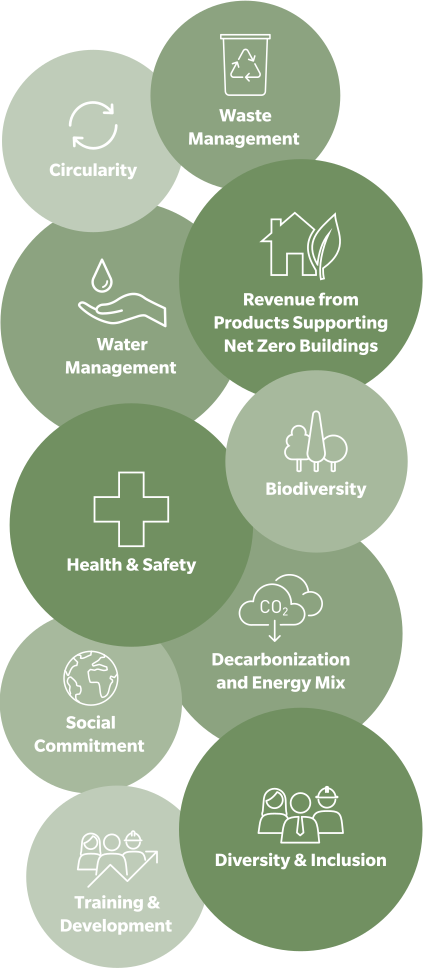
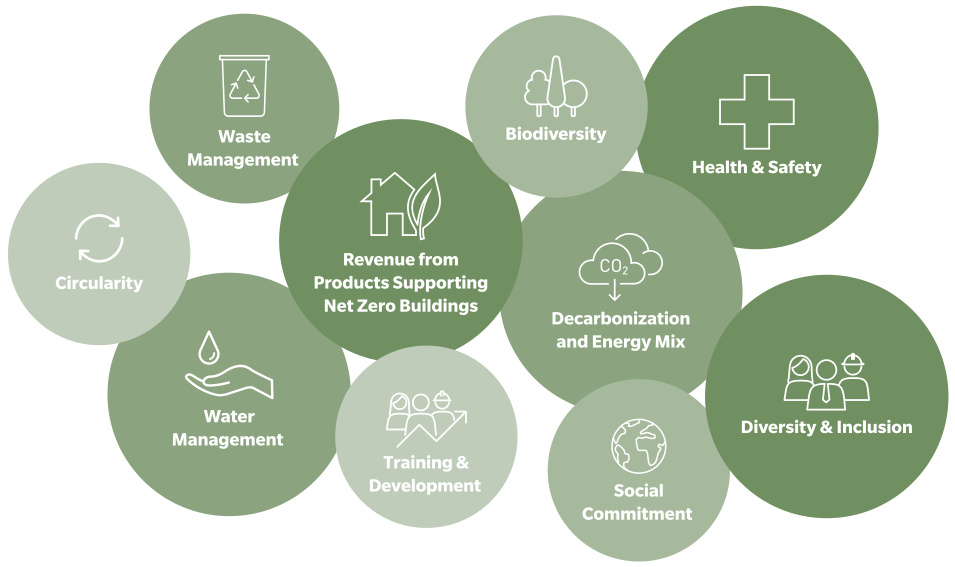
With our sustainable solutions for residential construction, energy-efficient renovation, and water and energy management, we not only improve quality of life but also actively contribute to addressing climate change. By the end of 2026, 75% of our revenue will be generated from solutions and products for net-zero buildings. These include products made from particularly sustainable materials as well as photovoltaic solutions for the generation of renewable energy.
- › With its sustainability program, wienerberger pursues ambitious goals in the areas of decarbonization, the circular economy, biodiversity, and water and waste management.
- › The sustainability program also includes social objectives to promote diversity, inclusion, health, safety, and the development of our employees.
Likewise, our sustainability program also defines social objectives and measures to promote diversity, inclusion, health, safety, and the development of our employees.
Progress 2025
The 2025 results of the Sustainability Program 2023–2026 confirm that wienerberger is well on track to achieve the 2026 targets by the end of the program, thereby supporting the achievement of the overall Sustainability Program objectives.
2026 Social Targets |
Key Performance Indicators |
2026 Targets |
2025 Progress |
|
|---|---|---|---|---|
|
Development and implementation of an inclusion and diversity action plan in all countries |
in all countries |
in 13 countries |
|
|
Visible leadership hours (VML) |
20,000 |
~54,500 |
|
|
Hours of training per employee |
18 |
22 |
|
Apprentices trained |
500 |
~690 |
||
Hours of training for installers |
30,000 |
~23,200 |
||
|
Housing units per year for people in need, built with our products and in the markets in which we operate / per year until 2026 |
200 |
~360 |
|
|
|
|
|
|
2026 Environmental Targets |
Key Performance Indicators |
2026 Targets |
2025 Progress |
|
|
Reduction in scope 1 & 2 CO2 emissions |
25% |
20.7% |
|
Reduction in scope 3 CO2 emissions |
10% |
25.2% |
||
Share of renewable energy used in own operations |
15% |
12.6% |
||
|
Sales from highly durable products (>100 years) |
> 80% |
83.9% |
|
Sales from recyclable and/ |
> 90% |
92.9% |
||
|
Improvement of fauna resulting from the biodiversity plans implemented for all production plants |
10% |
16.8% |
|
Biodiversity ambassadors trained |
400 |
~420 |
||
Trees planted, equivalent to one tree per employee per year / in total from 2022 until 2026 |
100,000 |
~180,000 |
||
|
Total revenue from building products contributing to Net Zero Buildings |
75% |
74.1% |
|
|
Water harvested, retained, and saved through our products in infrastructure and agriculture |
35 million m3 |
23.2 million m3 |
|
Reduction of water consumption in own operations |
15% |
7.9% |
||
|
Reduction of waste in own operations |
15% |
12.3% |
|


